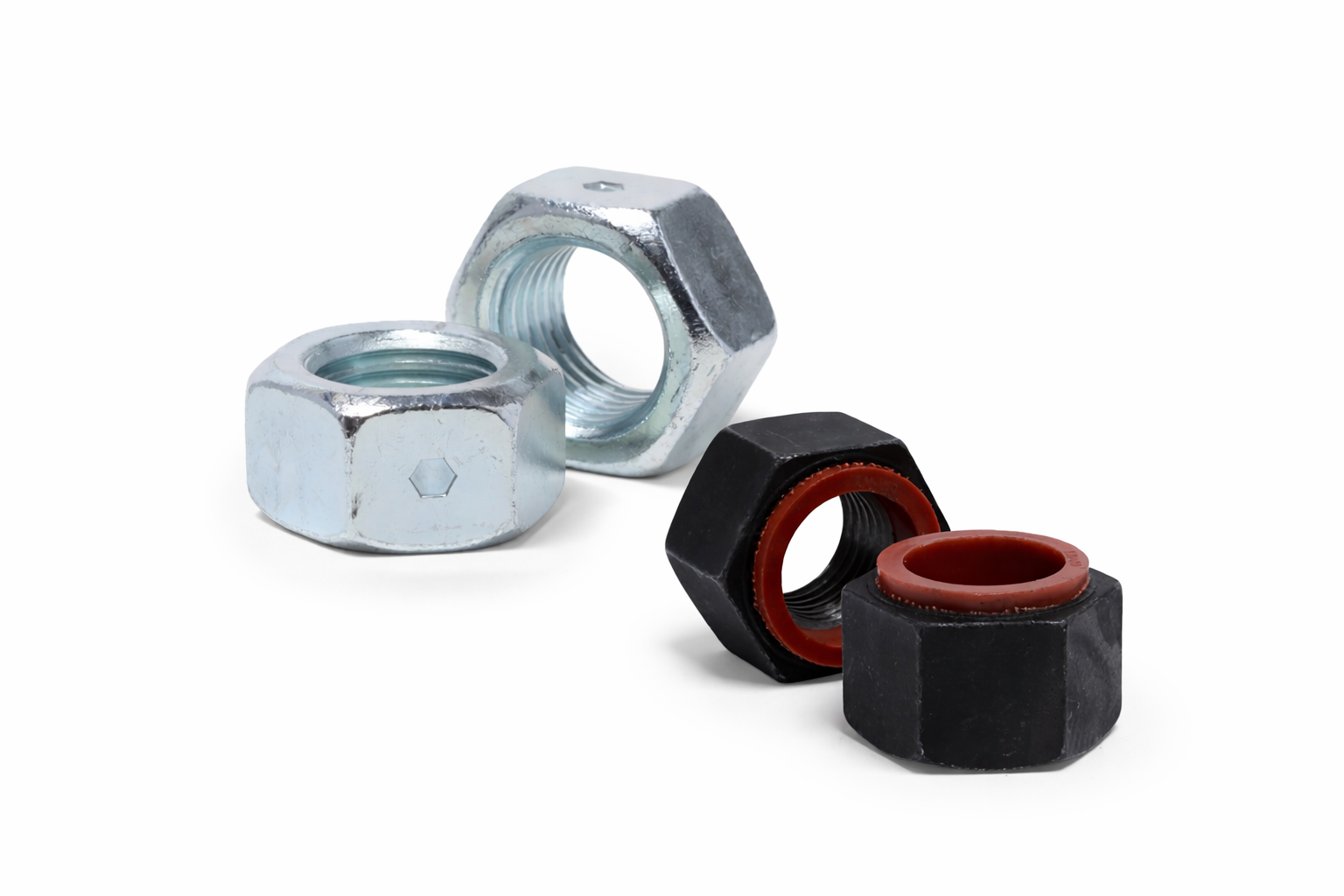
All-metal and nylon-insert designs are the two most common types of locknuts we manufacture at Lok-Mor®. It’s also one of the most frequent questions we hear from buyers and engineers: when is an all-metal locknut the better choice, and when does a nylon-insert locknut make more sense?
Both styles are proven solutions, but they behave differently in heat, vibration, installation torque, and environmental exposure. Below is a clear comparison, along with examples of Lok-Mor® locknut designs to help you narrow in on the right fit for your application.
Locknuts with Nylon Inserts: A Brief Overview
Nylon-insert locknuts, often referred to as “nylocs”, are a popular and versatile subgroup of locknuts. These nuts feature an insert, typically made of nylon or polymer, that deforms around the bolt threading when tightened to create a powerful lock.
At Lok-Mor®, we manufacture three locknuts with nylon inserts:
- The N-LOC™
The N-LOC™ is our standard nylon insert locknut. The nylon at its base creates a reliable locking mechanism that prevents loosening over time. This versatile nut is ideal for many applications, including automotive assemblies, industrial machinery, and construction.
- The PEL-LOC™
The PEL-LOC™ is our two-way pellet locknut. Unlike the N-LOC™, which contains a nylon insert at the base, the PEL-LOC utilizes a nylon pellet that extends through the wall of the locknut. Available with up to three pellets, the PEL-LOC design features a light-friction locking mechanism that can withstand harsh conditions.
- The DBL-LOC®
The DBL-LOC® is a free-spinning nylon variant. This locknut turns freely on the bolt until tightened, at which point the poly, nylon, or Teflon insert deforms around the threads to create a secure seal against environmental contaminants, such as mud and moisture.
All-Metal Locknuts: Advantages and Tradeoffs
All-metal locknuts are extremely common, and the specific locking method can vary significantly by design. While nylon-insert locknuts lose effectiveness at around 121° C (250° F), all-metal designs offer significantly greater heat resistance.
However, all-metal locknuts come with important tradeoffs. Depending on the design, they may damage bolt threads and typically require significantly more installation torque than nylon-insert locknuts. They can also be more vulnerable to moisture and corrosion unless they’re treated with the appropriate plating, coating, or material selection.
Here are a few examples of all-metal locknut designs we offer at Lok-Mor:
- The ANCO® PN-LOC®
The ANCO® PN-LOC® is our award-winning structural locknut. It features a stainless-steel ratchet pin and a unique locking indentation to ensure consistent locking torque. The design of the ANCO® PN-LOC® provides unmatched vibration resistance.
- The SPN-LOC®
The SPN-LOC® is a free-spinning locknut with serrated locking elements. These serrated elements bite into the mating surface when tightened for a secure lock without the need for washers.
- The TRI-LOC®
Our triple prevailing-torque locknut is easily identifiable by the three locking elements at the top of the nut. These elements deflect the threading when tightened, making it self-locking and highly resistant to vibration.
How to Pick the Right Locknut for Your Application
There are many different types of locknuts, each designed for specific applications. When picking between a nylon-insert locknut and a metal locknut, choose the one that matches your application requirements the best.
| Feature | All-Metal Locknuts | Nylon-Insert Locknuts |
|---|---|---|
| Locking Torque Required for Installation | Very high | Moderate |
| Damage to Threads | Depends on type; can destroy or alter threading | Minimal to none |
| Extreme Temperatures | Resistant to high temperatures | Not recommended above 121°C (250°F) |
| Environmental Contaminants | Requires treatment, plating, or coating | Resistant to moisture and other contaminants |
| Design Variety | Many specialized varieties | Fewer, more general designs |
If you’re unsure which design is best for your application, Lok-Mor® can help you narrow the options quickly. See our complete line of free-spinning and prevailing-torque locknuts, send an email to [email protected], or contact us today to discuss your application and find the best solution.