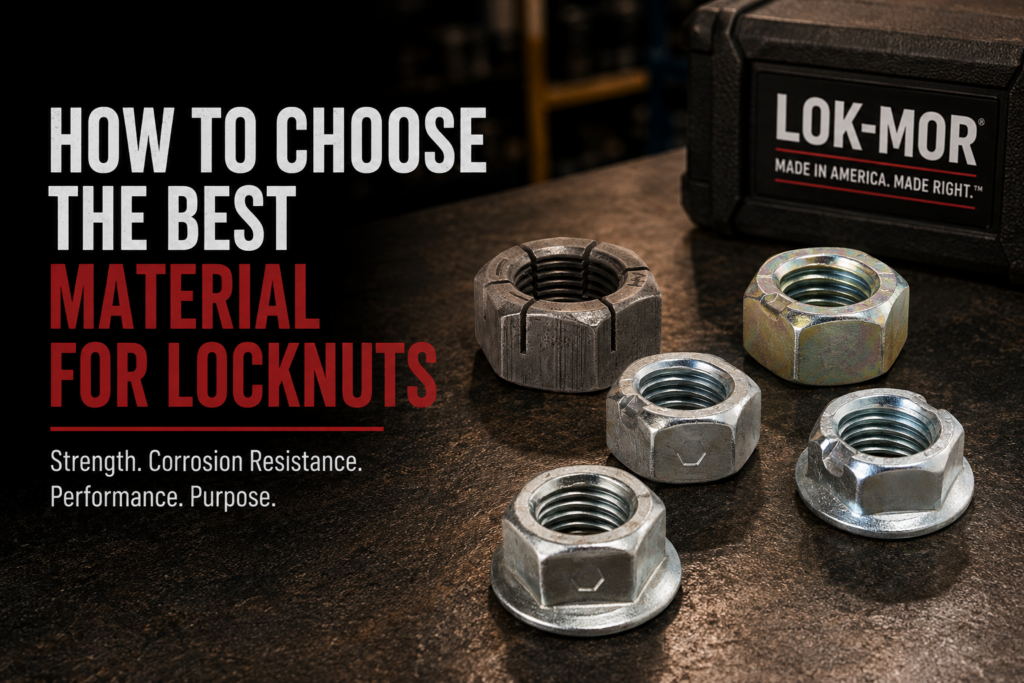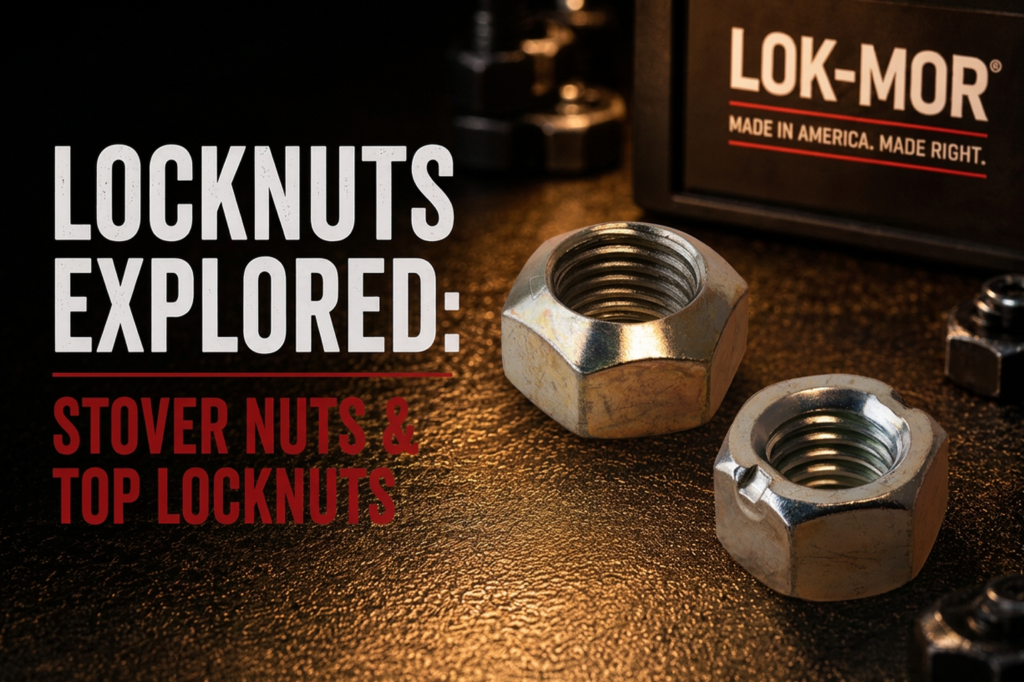
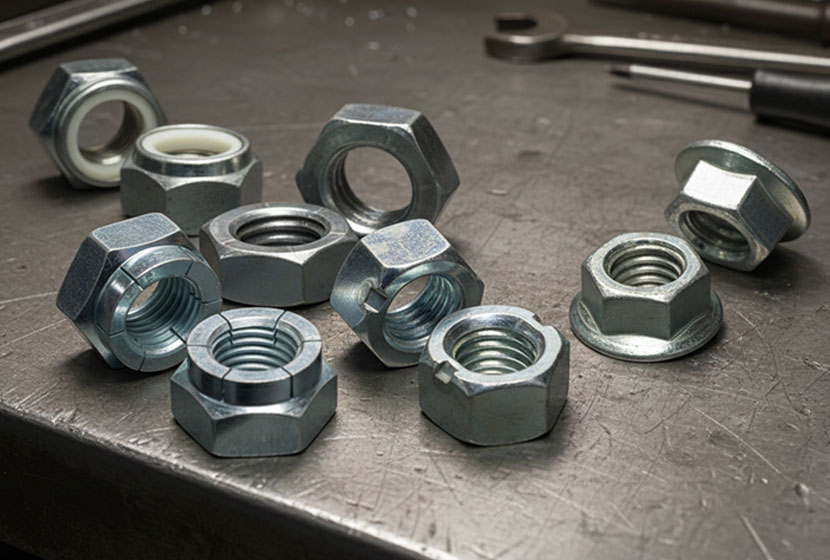
Locknuts can be broadly categorized into three types: prevailing-torque, free-spinning, and structural. While these three types of locknuts all provide a cost-effective and vibration-resistant solution to fasten joints, each has significant differences.
This blog specifically covers prevailing-torque locknuts, detailing how they differ from other kinds of locknuts, how they work, and the applications in which they are ideal.
How do Prevailing-Torque Locknuts Work?
Unlike free-spinning locknuts, which are designed for easy installation and reusability, prevailing-torque locknuts provide exceptional locking strength by creating constant frictional resistance between the threads and the bolt. This frictional resistance results from metal threads deforming into bolt threads. For nylon-insert locknuts, a polymer piece deforms into the bolt threads instead.
An important note on prevailing-torque locknuts is that, due to the deformation, they are not typically designed to be loosened or reused.
Different Types of Prevailing-Torque Locknuts
There are many types of prevailing-torque locknuts, each designed for specific application demands. At Lok-Mor®, we offer our customers 12 kinds of American-made prevailing-torque locknuts. Our most popular ones include:
The N-LOC™
The TRI-LOC®
The DURA-FLEX™
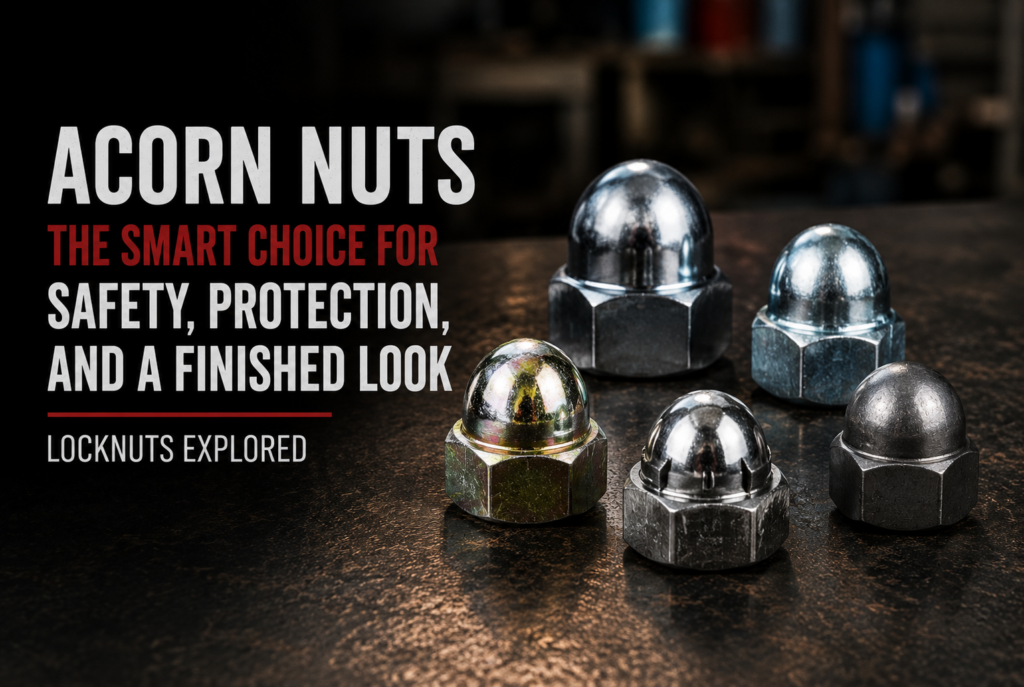
The DOME-LOC®
Applications for Prevailing-Torque Locknuts
The frictional resistance created when installing prevailing-torque locknuts makes them ideal for applications involving continuous vibration, shock, and extreme temperatures. Prevailing-torque locknuts are commonly used in manufacturing industries, including:
A Brief Summary
While all locknuts offer vibration-resistance, prevailing-torque locknuts continue to be popular in manufacturing industries due to their exceptional locking strength, which stems from the locknut deforming around the bolt threads.
There are many types of prevailing-torque locknuts to better match application requirements. Interested in which prevailing-torque locknut is best for your application? Browse our complete line of prevailing-torque locknuts, contact a Lok-Mor® expert today, or email us at [email protected].