At Lok-Mor, we have spent over 40 years perfecting the art of fastener integrity from our facility in Mansfield, Texas. Whether we are manufacturing our award-winning ANCO® PN-LOC® or a custom order of exotic alloy hi-nuts, our goal remains the same: ensuring every part is Made In America. Made Right.™
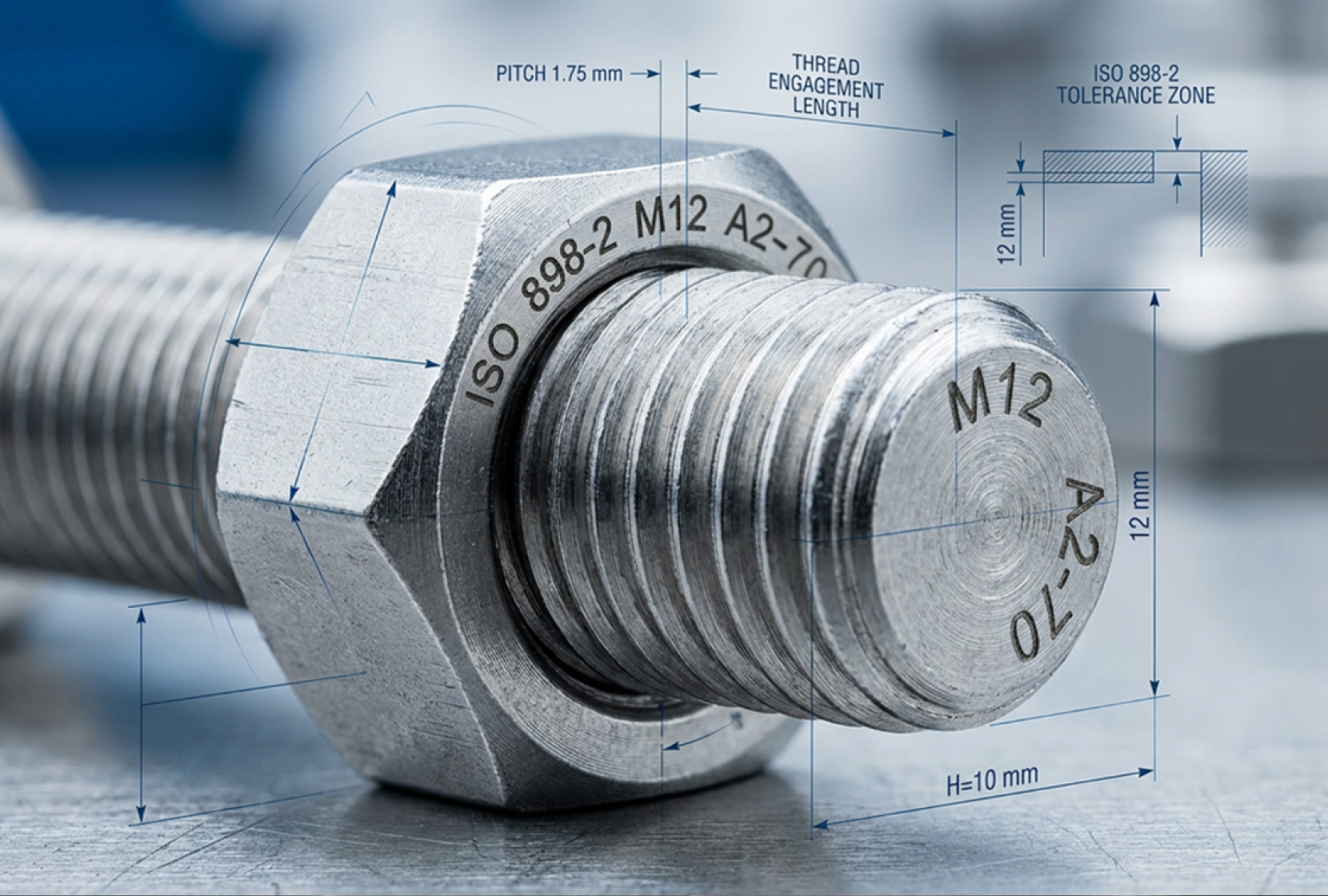
Ensuring that our products live up to this promise involves adhering to international benchmarks that define excellence in manufacturing. For many of our customers, the most important of these benchmarks is the framework provided by ISO standards.
This guide explores what these standards represent, how they benefit your bottom line, and the future of quality already being shaped at Lok-Mor.
What is the International Organization for Standardization (ISO)?
The International Organization for Standardization (ISO) is an independent, non-governmental international organization. Founded in 1947, and headquartered in Switzerland, it brings together experts from the national standards bodies of 170 member countries to develop voluntary, consensus-based, and market-relevant international standards.
To date, ISO has published over 25,000 international standards covering almost every aspect of technology and manufacturing. It’s part of their mission to create a level playing field for global trade and quality.
The Essential Distinction: Organizations vs. Products
Before diving into the specifics, it is vital to address one of the most frequent misunderstandings in the fastener industry: the idea that an individual product, such as a locknut, can be “ISO-certified”.
ISO certification applies to the organization and its management system, not to individual products. When you see that Lok-Mor® is ISO 9001:2015 certified, it indicates that our Texas facility operates within a strictly documented, audited framework.
This framework ensures that our processes are consistent, repeatable, and designed for continual improvement. While ISO certification ensures that our products consistently meet your specifications, the certification itself is a stamp of approval on our Quality Management System (QMS), not individual products.
Deep Dive: The Seven Principles of ISO 9001
ISO 9001 isn’t a set of rules for how to build a nut, but a blueprint for building a better business. It is based on seven quality management principles that guide everything we do at Lok-Mor:
- Customer Focus: Our primary goal is to meet and exceed customer requirements. We use your feedback to refine our service.
- Leadership: Our management establishes a “unity of purpose”. They are accountable for the effectiveness of the QMS and ensure that quality remains central to our operation.
- Engagement of People: We believe that competent people at all levels are essential. We invest in training and education to ensure our team understands their role in maintaining your joint integrity.
- Process Approach: We manage processes as a single system to achieve more efficient and predictable results.
- Improvement: We use a methodology known as the Plan-Do-Check-Act (PDCA) cycle to constantly evaluate and enhance our production.
- Evidence-based Decision Making: We use data from our lab and production lines to ensure strategic choices are grounded in reality, not gut feelings.
- Relationship Management: Our success is linked to our suppliers and partners. We manage these relationships to create mutual value and ensure the stability of our domestic supply chain.
The Tangible Benefits for Lok-Mor Customers
Why should a procurement professional or a design engineer care about ISO 9001? The benefits are not just theoretical; they are measurable and impactful.
- Consistency and Reduced Risk: ISO 9001 requires us to use risk-based thinking, meaning we identify potential failures in the manufacturing process before they happen. For you, this means fewer non-conformances and a significantly lower risk of catastrophic failure in the field.
- Operational Efficiency: Studies have shown that firms adopting structured quality systems like ISO 9001 see 15–25% improvements in efficiency within two years. By streamlining our internal processes, we can offer some of the fastest lead times in the industry while maintaining peak quality.
- Waste Reduction: Poor processes can drain 5–15% of a company’s resources annually. Certified manufacturers typically achieve 10–20% reductions in rework and waste.
- Streamlined Procurement: Many suppliers and OEMs exclusively work with ISO-accredited facilities. Certification signals that your supplier is reliable, externally audited, and professionally managed, reducing your own administrative burden during vendor audits.
- Full Traceability: As part of our QMS, Lok-Mor maintains rigorous lot traceability. We can provide Material Test Reports, Plating Certifications, and Certificates of Compliance upon request. You get a digital paper trail for every nut on your job site.
The Future of Quality: ISO 9001:2026
The world of manufacturing is evolving, and so is ISO 9001. A major revision, ISO 9001:2026, is currently in development to address modern business challenges.
While the 2015 version remains the current standard, Lok-Mor is already looking ahead to these updates, which will ensure that ISO 9001 remains the ultimate standard for resilience and sustainability in a volatile global market.
Our Comprehensive Approach to Quality
While ISO 9001 provides the management framework, we utilize a range of other specialized standards to ensure the physical and technical integrity of our hardware. Our Texas facility meets a comprehensive grid of specifications:
- ISO/IEC 17025: This is the standard for Testing and Calibration Laboratories. It ensures our in-house lab is competently operated by qualified personnel, using calibrated equipment, to deliver accurate, traceable, and repeatable results.
- ASTM International: These standards define the specific material properties and mechanical performance required for different grades of carbon steel, alloy steel, and stainless steel. For example, ASTM A563 and ASTM A194 govern many of the locknuts we produce.
- ANSI/ASME: These define the physical dimensions, thread forms, and tolerances of our fasteners. This ensures that a Lok-Mor nut will fit your equipment perfectly, regardless of where the other components were sourced.
- Mil-I-45208: This military-grade standard outlines the strict inspection systems and documentation necessary for our customers to fulfill defense and government contracts.
The Lok-Mor Promise: Made in America. Made Right.™
By manufacturing every locknut at our Texas headquarters, we maintain 100% oversight of these rigorous standards. We don’t just hope our products perform; we use the science of ISO, ASTM, and ANSI to prove they do.
When you choose Lok-Mor, you choose a partner dedicated to the highest levels of global excellence and domestic reliability. Our expertise gives our customers peace of mind and confidence in the integrity of their most critical assemblies.
Need technical specifications or a Certificate of Compliance for your next project?
- Call a Lok-Mor expert: 800-843-7230
- Email us for a quote: [email protected]
- Fill out our form to Get a Quote