Since 1982, we at Lok-Mor® have reliably manufactured industrial-grade locknuts from our Mansfield, Texas, facility. Based on our 40+ years of experience, design engineers and procurement personnel frequently approach our locknut experts with questions about the many types of locknuts we produce.
In this blog, we’ll cover what flange locknuts are, how they work, and when they’re the right choice, with a real-world example from our product line.
Flange Locknuts: What Makes Them Unique
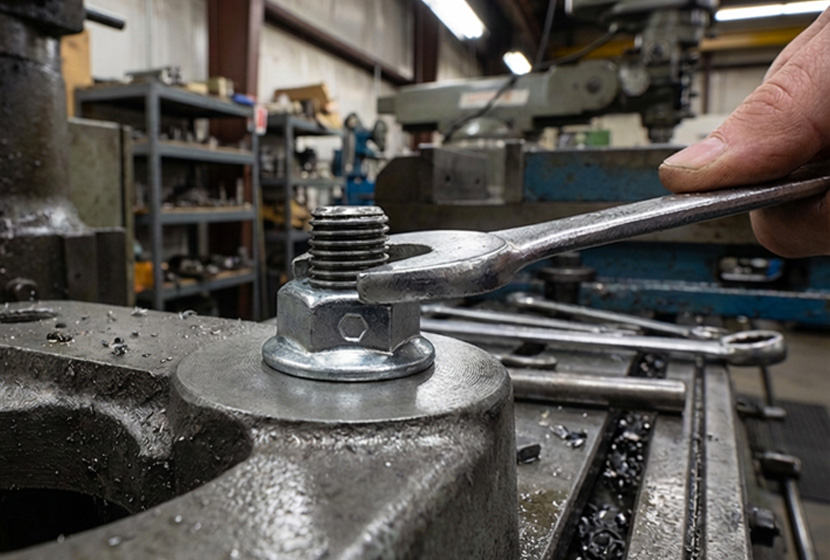
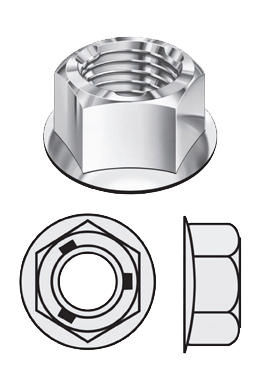
Flange locknuts are identical to standard locknuts, but with the addition of a large, circular base at the bottom of the nut. This flared base, known as the flange, acts as an integrated washer that turns with the nut. The widened base distributes the tightening force over a greater area, which can be helpful when working with softer materials such as aluminum, plastics, or wood.
A secondary benefit of the flange is that it allows for a greater connection on uneven surfaces. If the flange is large enough, it can even cover holes or gaps on the connection surface.
An Example: The Flange TRI-LOC™
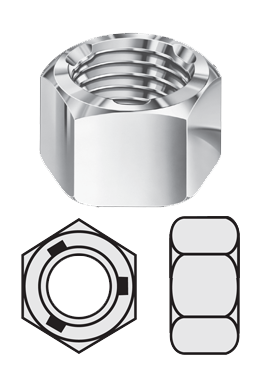
To illustrate the use of flange locknuts, let’s examine Lok-Mor’s FLANGE TRI-LOC™, a variant of our signature TRI-LOC®. This prevailing-torque nut is easily identifiable by the three locking elements at the top of the nut. They deflect the threading when tightened, making the standard TRI-LOC self-locking and highly vibration-resistant.
The FLANGE TRI-LOC adds a flange at the base of the nut, offered in regular or extra-large sizes. The flange can also be specified with serrations, which allows the locknut to bite into the mating surface for a stronger hold, especially important in vibratory environments.
When to Use Flange Locknuts
Flange locknuts are used across a wide range of industries because they combine locking performance with built-in load distribution. They’re commonly used in applications where vibration resistance and assembly efficiency matter.
Here are a few common industry examples:
- Automotive Industry: The vibration-resistance of flange locknuts makes them ideal for securing components in automotive assemblies.
- Machinery and Equipment: Flange locknuts’ locking strength, vibration resistance, and ease of assembly are valuable for industrial equipment assemblies.
- Construction: Flange locknuts can be coated or plated, which adds useful versatility for construction environments.
- Electronic Equipment: In some assemblies, the flange can help seal out moisture and other contaminants.
When Not to Use Flange Locknuts
Flange locknuts are versatile, but they aren’t always the best fit – especially serrated flange designs. Avoid using serrated flange locknuts on surfaces that shouldn’t be damaged or scratched.
Flange Locknuts vs. Locknut and Washer Assembly
If a flange locknut has an integrated washer, why not use a standard locknut and washer assembly to reduce costs? While a washer assembly may be cheaper in the short term, the flange locknut offers several significant advantages:
- Fewer pieces can speed up assembly
- Greater stability and strength
- Greater resistance to loosening
- Available with coatings, platings, and heat treatment options
- Often lighter than a locknut and washer assembly
Picking the Right Locknut for Your Application
Flange locknuts are a smart option in many assemblies, but the best locknut choice always depends on your joint design, materials, and environment. If you’re not sure whether a flange locknut is the best fit, Lok-Mor® can help you narrow options quickly.
See our complete line of free-spinning and prevailing-torque locknuts, send an email to [email protected], or contact us today to discuss your application and find the best solution.